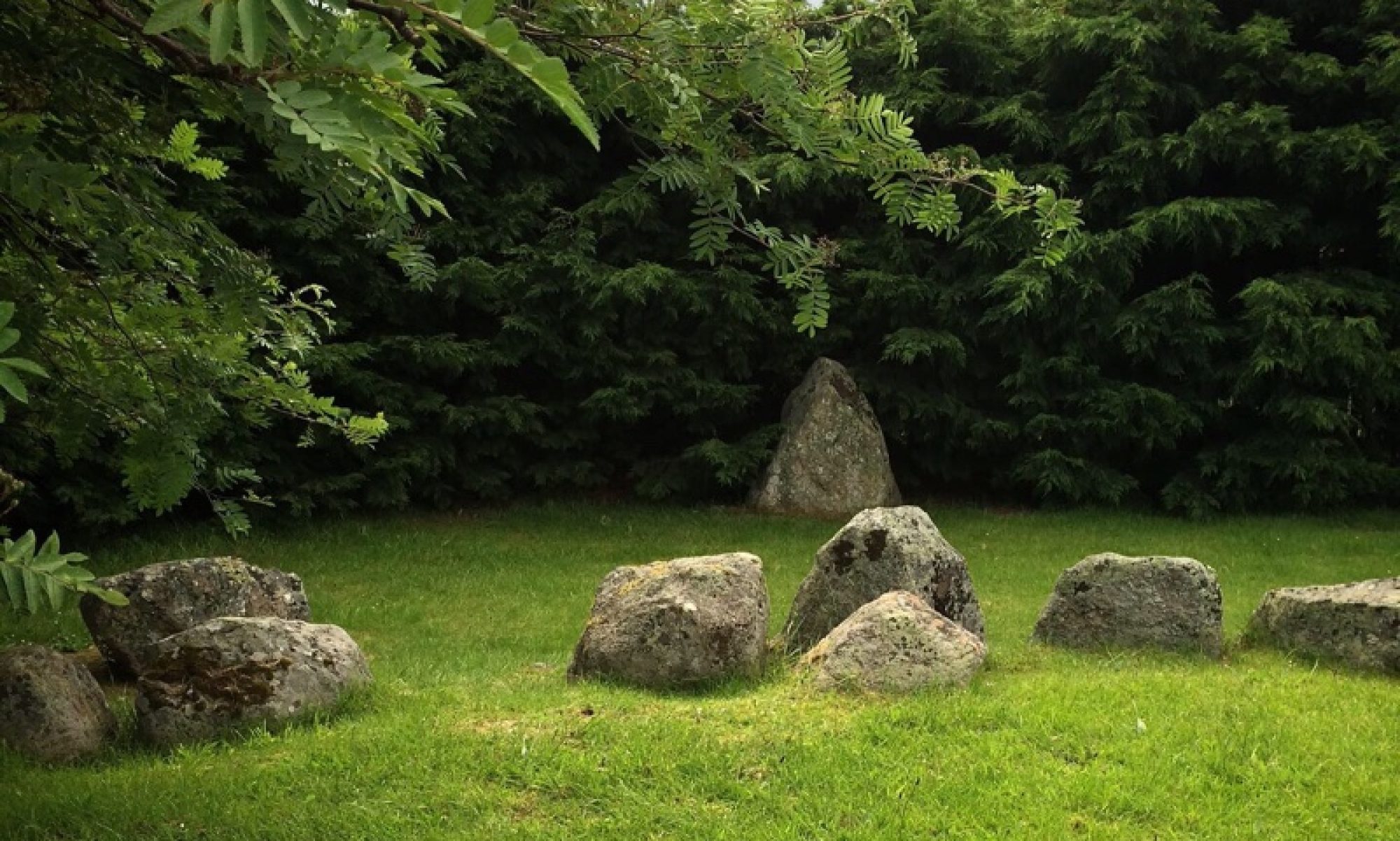
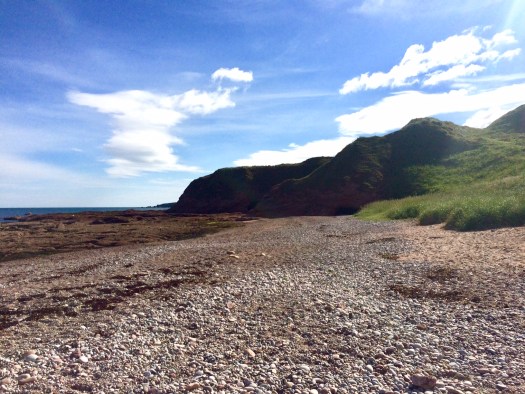
Lavender’s blue, dilly dilly, lavender’s green, When I am king, dilly dilly, you shall be queen: Who told you so, dilly dilly, who told you so? ‘Twas mine own heart, dilly dilly, that told me so.
Current writing research has taken me to the 17th century, and this folk song that has its origins in that time, is in my mind. The older versions are a little earthier…
Lavender blue and Rosemary green, When I am king you shall be queen; Call up my maids at four o’clock, Some to the wheel and some to the rock; Some to make hay and some to shear corn, And you and I will keep the bed warm.
The lavender is SO very fragrant just now, and the cornflowers are SO very blue 🙂
Ariel: Dancing on TV
Torn from a life where she never fitted in, Ariel quickly becomes the focus of a reality TV show. In the castle school, she forms deep friendships and meets Alexander, the best looking boy she’s ever seen. Together, they unravel the mysteries of the castle’s shadows and confront the demons of Ariel’s past.
Can she rise above a lifetime of pain and embrace the possibilities of fame and love that beckon to her?
‘Ariel: Dancing on TV’ is a mesmerising tale of resilience and the pursuit of a brighter future against all odds.
The Performance: sometimes going home for Christmas is just one huge performance…
When Ariel returns home from dance college, her mother expects her to perform the Dance of the Sugar Plum Fairy in a pink, sequined tutu in front of many, many party guests. Ariel adjusts the costume and choreography to expose dark truths about her life, but, as it turns out, this is not the biggest performance of the night…
New Books and Special Offers
If you would like to hear about new books and special offers, you can follow my Amazon author page.
The visitor centre at Culloden is high-tech, swish, clean and pristine, all the things the bloody battle of the past was not. The contrast always gets me. I sit on a soft red sofa looking out at the battlefield, eating my delicious lentil soup and enjoying decadent chocolate cake in comfort and warmth.
Compare that to being one of the Jacobite clansmen, having marched across boggy rough terrain in the dark all night, exhausted, starving, about to be slaughtered in a fight so unfairly matched that it was all over in one hour. What would he think of Culloden Moor today and the nice day out it provides for families and tourists?
Out on the battlefield, things feel more authentic, more memorial. Red flags mark the government line:
Clan stones over mass graves:
Old Leanach Cottage is dated about 1760, several years after the battle, but is said to stand on the site of an earlier cottage that was used as a field hospital for government troops:
People leave offerings:
After a little look at the peaceful, cud-chewing, Highland cattle, it’s time to visit some ancient standing stones.
Here ancient burial cairns (estimated at about 4000 years old) are surrounded by circles of stone and trees. It’s the perfect peaceful place to visit after Culloden.
You can walk right into two of the three cairns, though the entrance tunnel would have been covered in the past: you would have had to crawl.
Some of the standing stones are high and shaped, rather like enormous graves:
Let’s finish with one of the aforementioned Highland Coos. There’s four of them in a field next to Culloden.
Set in 1st century Scotland, SISTERS AT THE EDGE OF THE WORLD includes the battle of Mons Graupius between the Romans and the Caledonian tribes. The book features a neurodivergent main character and some rather complicated romance!
Taking place mainly in a fictional castle, THE MERMAID AND THE BEAR blends an often overlooked period of history, the Scottish witchcraft accusations, in particular the 1597 Aberdeen witchcraft panic, with a love story.
FIREFLIES AND CHOCOLATE, out April 1st, is set at the time of Culloden and inspired by the kidnapped children and young people of Aberdeen. The story follows the adventures of Elizabeth Manteith from the castle and her determined efforts to get back home. There’s love. There’s derring-dos on the high seas… And there’s chocolate!
My dance background and love of history and spicy stories are what inspired this wild mix of romance and ballet set between a Scottish castle and London.
There are no cliffhanger endings in this series; each book completes a story, but then there is more. So much more. Read all the blurbs here
When dance student Amalphia Treadwell embarks on a secret relationship with her charismatic new teacher, she has no idea of the danger that lurks in his school in Scotland…
Go here to sign up for occasional emails that always include some exclusive photos and news of my writing and life. They’re a more intimate space than the blog. If you would like to hear about new books and offers, you can follow my Amazon author page.
There were dramatic skies the last time I went to look for reindeer in the Cairngorms. They were beautiful though. These were skies to stand and stare at.
And mountains to walk around in.
The Funicular Railway
The funicular railway was out of service, due to cracks having been discovered in the cement so, with my autoimmune conditions flaring, I didn’t venture as high into the landscape as I would have liked.
Lentil Soup
It was more of a restful day than an energetic one. A ‘lentil soup in the cavernous restaurant at the base station’ type of day (you will get lentil soup everywhere you go in Scotland).
Those Reindeer in the Cairngorms
The free-ranging reindeer herd remained elusive on this trip, but here’s an older photo of them. There are much better pictures on their own website!
Chosen Sisters, Romans and Romance
Set in 1st century Scotland, SISTERS AT THE EDGE OF THE WORLD includes the battle of Mons Graupius between the Romans and the Caledonian tribes. The book features a neurodivergent main character and some rather complicated romance.
Review from Terry Tyler: “It’s a fabulous story, a real page-turner and so well written. It made me think about the passage and circle of time, of the constancy of the land on which we live and the transient nature of human life. Loved it.“
Go here to sign up for occasional emails that always include exclusive photos and news of my writing and life. They’re a more intimate space than the blog.
A misty Midsummer morning: a perfect time to hear the carnyx
It’s Midsummer, and I’m in celebratory mode and sounding my (imaginary) carnyx, a wind instrument of the Iron Age Celts.
Midsummer in the woods
Sound of the Carnyx
In the video below, a musician plays a reconstruction of the Deskford Carnyx. The original was discovered in this area of Scotland and dates from the time of my Iron Age novel, SISTERS AT THE EDGE OF THE WORLD.
SISTERS AT THE EDGE OF THE WORLD
Set in 1st century Scotland, SISTERS AT THE EDGE OF THE WORLD includes the battle of Mons Graupius between the Romans and the Caledonian tribes. The book features a neurodivergent main character and some rather complicated romance…
Midsummer, or High Summer, is important to the people of the book. There’s dancing, singing, storytelling and other, naughtier, activities in the stone circle. There’s also feasting and fighting, and the sound of a newly constructed carnyx.
Go here to sign up for my occasional emails that always include some exclusive photos and news of my writing and life. If you would like to hear about new books and offers, you can follow my Amazon author page.
The Battle of Auldearn took place on the 9th of May, 1645 as part of the wider Wars of the Three Kingdoms. It was fought between a Scottish Covenanter army who were aligned with the English Parliament, and the Royalist forces of Charles the 1st. The Royalists won the battle despite being hugely outnumbered 4000 to 1500.
It was a long and bloody day, and the fighting took place over quite a large area around and actually in the village of Auldearn right between the houses.
A view of Garlic Hill, one of the battle sites, from under my umbrella:
I’ve been researching the battle as part of my wider research about Isobel Gowdie; it took place 17 years before her famous confessions. What a horrific and traumatic event it must have been for the people of Auldearn, and not one that anyone who lived through it would ever forget.
Liking to immerse myself in the history, places and times that I write about, I stayed in the friendly and relaxed 1645 Inn in Auldearn. It’s situated right on the edge of the battle field, and I had strange and disturbed dreams about the battle at night. Will this make the novel more strange and disturbed? Quite possibly.
The Boath Doocot
The 17th century Boath Doocot (dovecot) is a good place to overlook the battle field. The doocot itself would not have been there at the time of the battle, but the old motte that it stands on certainly was. It dates from the 12th century and was the site of a medieval castle called the Old Castle of Eren, the source of the name Auldearn.
Pigeons coming in to land:
Dead Man’s Wood
I wanted to find Dead Man’s wood. Sometimes just referred to as the ‘Dead Wood’, this is a tiny woodland that is said to be the burial site of the slain Covenanters from the Battle of Auldearn. Several map apps on the go, I travelled the roads round Auldearn looking for it. And there, in the middle of a ploughed field (so I did not cross) I found it.
There were poppies growing nearby. Storms have had their way with the wood, and most of the older trees have blown down. Elderflowers bloom on the site.
It’s said that people who were executed on Gallows Hill were sometimes buried in Dead Man’s Wood too, so it is possible that this might be the final resting place of Isobel Gowdie herself. There are no actual trial records for Isobel and her accomplice Janet Breadheid, and though one was granted, it had caveats, so the fate of the two women is unknown.
An iris grows beside the battlefield today… and on with draft two I go.
The Mermaid and the Bear (a novel about a different Isobell)
Lost in ancient woodlands and caught up in whispers of witchcraft, Isobell must navigate danger to reclaim her life. Can she find her happily ever after?
I walked up to the local witch stone this morning, and found wild violets growing round the base of it. This stone is said to mark the site of historical witch burnings, and these little purple flowers seemed fitting somehow. Like nature had placed something beautiful where once there was ugliness.
Someone had left a wee wicker offering too.
And the landowner had trimmed the gorse.
And the final item on this list of witch-stone happiness? I was actually able to walk up the hill to the stone for the first time since my latest autoimmune flare-up.
Taking place mainly in a fictional castle, THE MERMAID AND THE BEAR blends an often overlooked period of history, the Scottish witchcraft accusations, in particular the 1597 Aberdeen witchcraft panic, with a love story. There’s 6 chapters of medieval Christmas too.
Sign up to the mailing list for news about my life and writing, and some exclusive photos. If you would rather just hear about new books and offers, you can follow my Amazon author page.
The term ‘blue mind’ describes the mild meditative state that we enter when in or close to natural bodies of water. It was coined by marine biologist Dr. Wallace J. Nichols. He wrote a book on the subject and did a Ted Talk too:
So ‘blue mind’ in mind, and encouraged by my wee trip to Rosehearty Harbour, I ventured out again. Travelling slightly further this time, I arrived at New Aberdour beach where everything was blue, blue, blue…
Blue Mind to Pink Rocks
Feet bare, I sat on the pink rocks and stared out to sea.
I saw stones and pools and pink, lots of pink everywhere.
I am just looking at the soft shapes of land, and the hard shapes of rock, as they drop away into the sea. No in-between places up on top here. No beach, no marsh. Here the space between life and death is painted clear. You could be walking on grass one moment and dead on the rocks the next. This is a place of instant transition from one state to another.
There’s more ‘blue mind’ photos in the older post Going Coastal.
Set in 1st century Northern Scotland, SISTERS AT THE EDGE OF THE WORLD is a story of chosen sisters, fierce warriors, divided loyalties and, ultimately, love. It features a neurodivergent main character, the battle of Mons Graupius between the Romans and the Caledonian tribes, and some rather complicated romance!
Go here to sign up for my occasional emails that always include exclusive photos and news of my writing and life. They’re a more intimate space than the blog. If you would like to hear about new books and offers, you can follow my Amazon author page.
These days, you don’t have to catch a boat or ferry and can drive straight over the large Skye bridge. That’s the Old Man of Storr in the hills above, a beautiful rock formation visible for miles around. This post details a holiday I took with my family in 2017, before chronic illness put paid to such things as holidays. For now. I have to believe, for now. But enough of that, over the sea to Skye we go!
Dun Hallin
The island is a place of fairies: there’s a castle and a glen and a bridge, much smaller than the one taken to get to the island. But first, back to another rock formation, specifically the one spied from the bedroom window of our holiday house.
‘That’s an interesting rocky outcrop,’ said I to husband.
‘Aye, we should walk up to it,’ he replied.
So we did.
And there was Dun Hallin, an Iron Age broch we had intended visiting but thought would be hard to find. Duns, or brochs, were a complex form of roundhouse, probably defensive, precursors to castles.
I loved Dun Hallin and the surprise of finding it like that. And the wonderful views of Trumpan Point.
The Trial Stone
Trumpan Kirkyard held surprise too. An ancient standing stone, Clach Deuchainn, the Trial Stone:
Trial stones were used to try a person. In this case if the accused could put their finger in the hole located on the stone, while blindfold, they were innocent. The stone is undoubtedly far older than this use. It is also known as the Priest Stone and the Heaven Stone.
There were some interesting graves too; these, and the gruesome history of the church can be read about here.
Fairies
But back to the fairies. Firstly the Fairy Glen, an unusual land formation, which sadly does not have anyfolklore associated with it, but it does feel otherworldly when you walk round it.
The rocky peak is known as Castle Ewen:
It’s Dunvegan Castle that we need for fairy legends!
Displayed inside the castle, so no photos, is the ancient and tattered Fairy Flag. There are many stories and traditions surrounding this relic and its origins. The tale favoured in the information provided to visitors is the one in which the Chief of Clan Macleod marries a fairy. The couple have a child together but the fairy knows she has to return to her people in Fairyland. She leaves the magical flag, imbued with protective powers, wrapped round the baby, and this she does a few miles away at the Fairy Bridge:
There are also Fairy Pools on Skye but we did not get to them this trip. We did manage a quick visit to Kilt Rock:
We also took in the Museum of Island Life, one of the few places on the island with good mobile internet which meant I was distracted by a sudden barrage of Twitter notifications!
Near to the museum is the memorial to Flora MacDonald:
One more fairy mention: the house we stayed in was previously owned by the writer Aileen P. Roberts, and full of books, so I read her novella Fairy Fire while there, which was set in Skye and surprising and perfect.
The sun rises over Dun Hallin:
And sets at Trumpan Point:
We’ll be back over the sea to Skye again one day!
Newsletter
Go here to sign up for my (roughly monthly) newsletter. It’s a more intimate space than the blog and always includes some exclusive photos. If you would rather just hear about new books and offers, you can follow my Amazon author page.
My Books
Set in 1st century Scotland, my latest novel, SISTERS AT THE EDGE OF THE WORLD, includes the battle of Mons Graupius between the Romans and the Caledonian tribes. The book features a neurodivergent main character and some rather complicated romance!
Taking place mainly in a fictional castle, THE MERMAID AND THE BEAR blends an often overlooked period of history, the Scottish witchcraft accusations, in particular the 1597 Aberdeen witchcraft panic, with a love story.
FIREFLIES AND CHOCOLATE was inspired by the kidnapped children and young people of Aberdeen. The story follows the adventures of Elizabeth Manteith from the castle and her determined efforts to get back home. There’s love. There’s derring-dos on the high seas… And there’s chocolate!
From the misty hills of ancient Scotland emerges a tale of love, betrayal, and the fight for freedom. Join Morragh in SISTERS AT THE EDGE OF THE WORLD for an unforgettable journey.
Set in 1st century Scotland, the novel includes the battle of Mons Graupius between the Romans and the Caledonian tribes. There’s a neurodivergent main character and some rather complicated romance.
I love Loanhead of Daviot Stone Circle. Really love it. I know I’ve talked about how Aikey Brae is my favourite, and that is true. But this one comes in a close second. It’s another circle that I’ve been visiting for decades, often starting a day out with a quick walk round the stones.
A Wee Castle in the Woods
The approach is through woodland, and I like the wee castle that has appeared in recent years.
The path then leads up the hill and out to the stones.
Loanhead of Daviot Stone Circle
It’s a happy feeling circle, this one. They all have their own distinct atmosphere. Of course, maybe it’s just my own response to these places that I’m feeling. But then, isn’t everything that? A bit, at least. I once felt so happy at Daviot that I danced around in my bare feet and broke a toe on a hidden stone in the grass.
It always seems to be sunny there when I visit.
I picked up a fallen oak leaf from the adjacent ring of small stones that was used as a cremation cemetery in the distant past. The leaf is on my desk now as I write.
Daviot has been quite well excavated, with many cremation burials found (see the Historic Environment Scotland site). And there is, or was, a second circle across the valley. Only the large recumbent and flankers remain now. You can just make them out below, by the densest part of the tree line. You should be able to click the image to see a larger version.
We hold hands as we walk down and then up the short grassy valley that lies between the two circles. The stones we arrive at are overgrown with all manner of plant life. There are healing herbs that I recognise, wee flowers too, and spiny stems that look rather forbidding. Keep out, they say. Stay away. Leave the stones in peace.
And from Terry Tyler: “It’s a fabulous story, a real page-turner and so well written. It made me think about the passage and circle of time, of the constancy of the land on which we live and the transient nature of human life. Loved it.”
Set in 1st century Scotland, SISTERS AT THE EDGE OF THE WORLD includes the battle of Mons Graupius between the Romans and the Caledonian tribes. The book features a neurodivergent main character and some rather complicated romance…
An Autistic Dancer, a Byronic Hero and an Obsessive Scientist
Read my series A Dancer’s Journey. There’s ballet. There’s lots of naughtiness. And there’s peril!
Enjoy a kiss on the London tube in the first book, TENDU. Romp up and down the castle stairs. Dance in a stone circle. Attend a Ceilidh in the great hall. Have your brain studied in the dungeon. All fun, I assure you. Well, not quite all…
From emmalolly13 on TikTok: “This series has a special place in my heart… I feel so blessed to continue reading Amalphia’s story… Her journey with love has been rough… this is such a soul-touching series.”
Go here to sign up for occasional emails that always include exclusive photos and news of my writing and life. They’re a bit more intimate than the blog. If you would like to hear about new books and special offers, you can follow my Amazon author page.