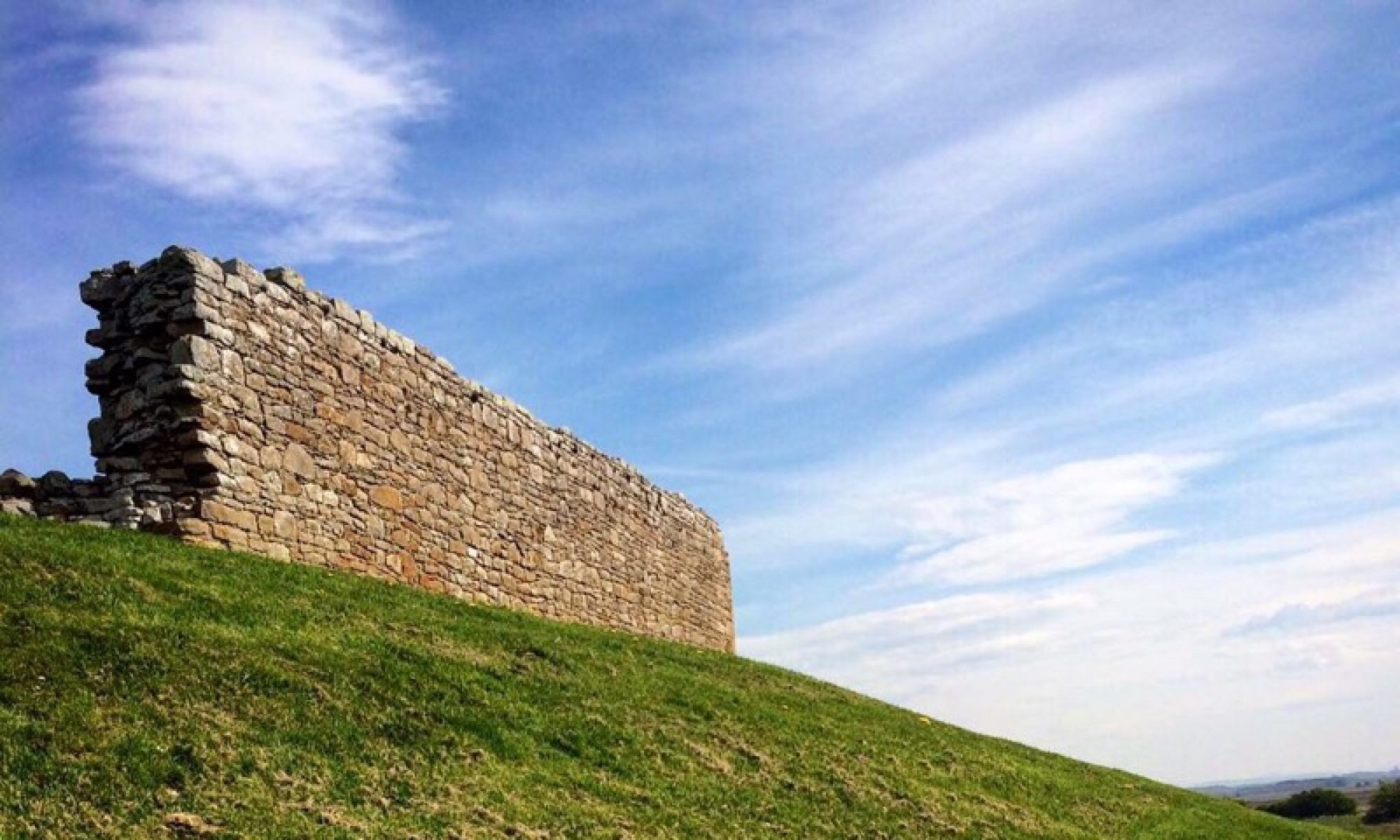

Migvie Kirk, near Tarland in Aberdeenshire, is misleadingly unimposing when you first see it. The present structure, now deconsecrated, dates from 1777, though there was an older medieval church there from at least the 12th century.
That was as much as I knew about the Kirk when I visited the kirkyard to see the Pictish stone, so what transpired was all rather delightful.
The Migvie Stone

This is a class II Pictish stone thought to date from the 8th century. This class of stone has a cruxifix on one side and traditional Pictish symbols on the other, unlike earlier stones which just display the older Pictish designs. Another good example is the Maiden Stone near Inverurie.
The cross is clearly visible on the Migvie Stone, but the other side is very worn and lichen covered, so I struggled to make out the images.

But all was about to be made clear…
Migvie Kirk

I’m nosy about old buildings. I push doors to see if they’re open, and this one was. It showed pitch-black darkness inside though, and having just encountered the same at the Culsh Earth House, I reached for my torch.
I stepped inside, and then there was light.

Motion sensors had activated lights and revealed a wonderful space which is now used for quiet contemplation and also as an arts venue. The interior of the door is carved with the symbols from the stone outside. The cross has loops as if it’s hanging on a necklace. Most unusual!

The landowner, along with local craftsmen and artists, renovated the derelict Kirk, after a battle with the council who had lost the original plans, and the work completed in 2001.
There’s a second Pictish stone inside:

Fragments are embedded in the walls too. I liked these Pictish feet:

The artwork and inscriptions are made up of a mixture of Christian writings, Pictish symbology and biblical passages written in both English and Ogham.

At one point, when all was still, the lights blinked off and everything went pitch black again.

Moving about soon summoned the light.

I intend a return to Migvie. I missed a cup-marked stone in the kirkyard and also an inscription of words from William Penn.
Migvie Kirk Facebook Page
Fireflies and Chocolate is set in both Aberdeenshire and Pennsylvania

Torn out of an isolated life in a Scottish castle, Elizabeth embarks on a determined quest to return home. Exhilarating adventures unfold on the high seas, love blossoms, and the chocolate, purchased in Benjamin Franklin’s printing shop, is delicious!
FIREFLIES AND CHOCOLATE was inspired by the 600 children and young people who were kidnapped from Aberdeen during the 1740s and sold into indentured servitude in the American Colonies. The story follows the adventures of Elizabeth Manteith from the castle and her determined efforts to get back home. There’s love. There’s derring-dos on the high seas… and there’s chocolate!
See the publisher’s Press Release here
“Ailish Sinclair spins this Scottish tale filled with excitement and suspense…” Review from the Historical Novel Society

Newsletter and Free Story
You will receive a free short story in e-book form when you sign up for my occasional, more-intimate-than-the-blog newsletter (the story can be read in a browser too).
The Performance: sometimes going home for Christmas is just one huge performance…

Author Page and Signed Copies
If you would like to hear about new books and special offers, you can follow my Amazon author page. Signed copies are available from my kofi shop.
About Page

See my About Page here
Writer’s Tip Jar
Discover more from Ailish Sinclair
Subscribe to get the latest posts sent to your email.
Love looking at old history like this
I also find it fascinating.
What a delightful find in the kirk! The stone is very impressive…
It was rather lovely.
The Migvie Kirk is marvelous, Ailish. That it has motion detect lights and a Pictish stone is fascinating to me.
The lights were unexpected!
I imagined so, Ailish.
How wonderful!
It was rather 🙂
Fascinated by Pictish art so thanks for sharing. Migvie Kirk looks a really cool space too
Pictish design was something special.